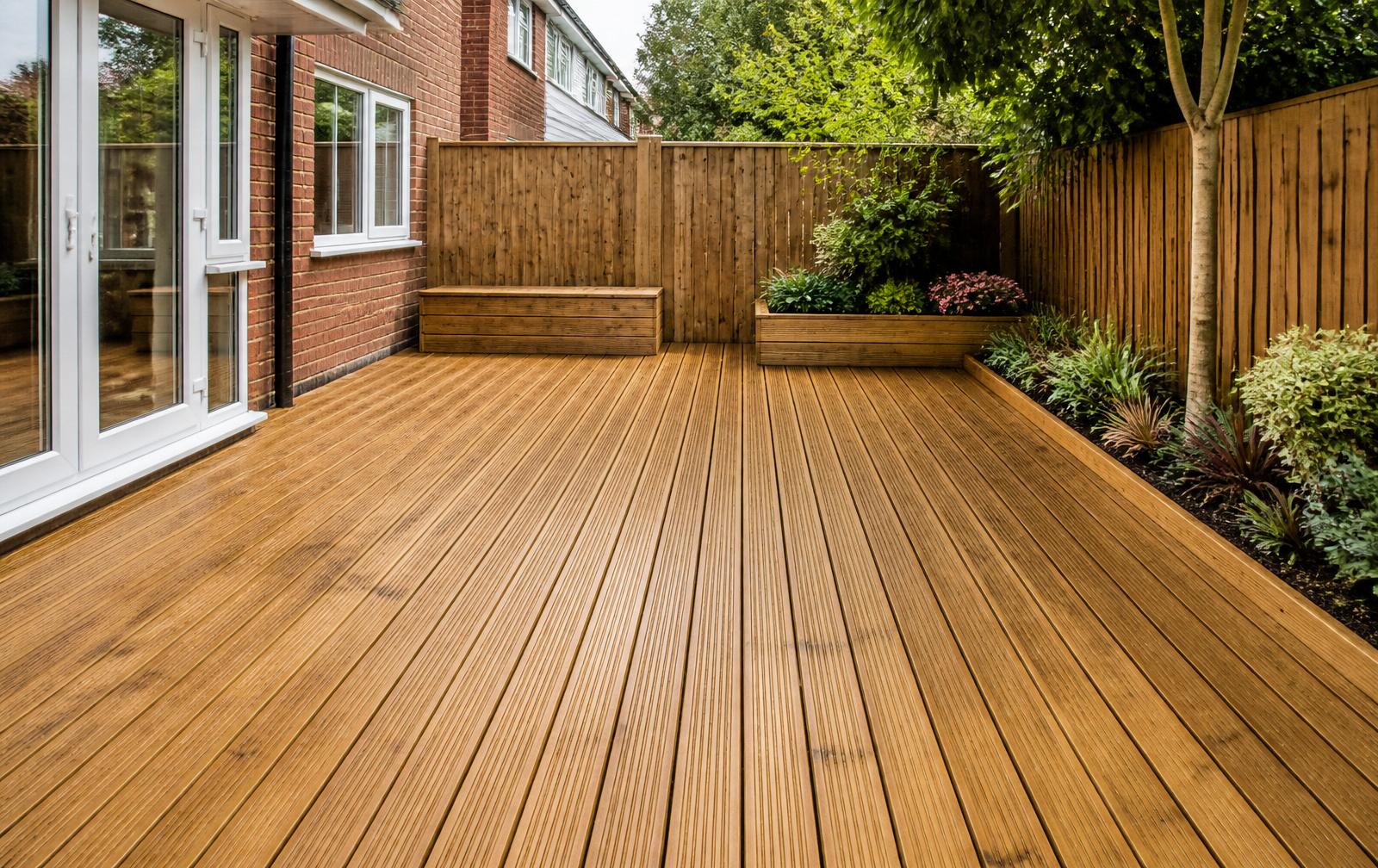
Professional Decking Cleaning in Dorset Timber & Composite: Safe Grip, Restored Finish.
Decking goes from garden feature to garden hazard once the algae builds up, greasy underfoot in October, and dangerously slippery in December. We restore both timber and composite decking to a clean, gripping, presentable finish without shredding the surface with a pressure washer.
5.0 Google · 10 reviews £10M public liability Reply usually within 30 minutes
£10M Public Liability
£5M Employers' Liability
First Aid & Rescue
Offshore-trained owner
Reply in 30 minutes
During contact hours
Owner-Led
Adam on every job
5-Star Google Rated
Verified customer reviews
The Service
What this job actually involves.
Decking cleaning is a careful combination of biocide and controlled water pressure. Timber decking gets algae into the surface grain, that's what makes it slippery, and it's what a good clean has to lift. Composite decking has a manufactured finish that pressure washers can damage, so it's chemistry-led with a much gentler rinse. Either way, the outcome we're after is a deck that's safe to walk on, presentable to look at, and ready to be re-oiled or re-sealed if the customer wants.
Who it's for
Homeowners with older timber decks that have greened over; families with steps or split-level decks worried about slips; anyone preparing a garden for summer entertaining, sale photos or letting; commercial hospitality sites with public decking (garden pubs, beach cafes, hotel terraces) where safety and appearance both matter.
When you need it
Green tinge across the boards in autumn, moss along the joint gaps, black spots from bird droppings or overhanging trees, standing water on the surface after rain, obviously slippery underfoot in the mornings, all early signs. Slippery decking is a genuine trip hazard, and it never fixes itself.
Why it needs a specialist
Decking damage from wrong cleaning is very visible. A high-pressure fan nozzle held too close will shred timber grain and permanently mark composite. Getting the right pressure and the right chemistry is straightforward when it's your day job, expensive when it isn't.
How we quote
For most work we prefer to visit in person so the quote is accurate, no online guesswork. Roof cleans can also be quoted from satellite imagery when a visit isn't convenient. Payment is on completion, cash or bank transfer, no deposits.
Why Waiting Costs More
Left untreated, small problems get expensive.
A green deck isn't a cosmetic issue. It's a safety issue. And unlike a stained patio, decking degrades physically once biological growth beds into the timber.
What happens if it's ignored
Slippery decking causes falls, on flat sections and much more dangerously on steps and split-level transitions.
Timber decking degrades from the top down when algae holds moisture against the boards. Left long enough, boards rot from the surface inward.
Composite decking stained with black spot or set-in leaf tannins gets harder to shift the longer it sits, early cleaning is dramatically easier.
Fixings (screws, joist hangers) corrode faster when the deck stays wet under a mat of algae, weakening the structure below the surface.
A tired-looking deck knocks visible value off garden appeal at exactly the time you want it, summer, sale photos, letting listings.
Common DIY mistakes
Blasting a timber deck with a fan pressure washer, it shreds the surface grain and creates permanent fluffing along every board.
Bleaching the deck. Kills what's visible for a fortnight, then everything regrows because the algae's root system is untouched.
Cleaning composite decking with abrasive tools or hard bristles. It scours the manufactured finish.
Oiling or staining over a dirty deck. Any coating over live algae fails from the underside within a season.
Ignoring the gaps between boards. Debris in the gaps holds moisture and feeds the next algae bloom.
Our Process
A methodical system, not a rushed hose-down.
01
On-site inspection
We identify decking type, softwood, hardwood, composite or capped composite, assess algae depth, joint condition and fixings, and quote in writing.
02
Debris clear-out
Leaves, moss and debris cleared from board gaps first. Cleaning around debris just moves it into different gaps.
03
Biocide dwell
Correct-strength biocide applied to kill algae, moss and black spot at the root. Dwell time appropriate to the growth depth.
04
Controlled clean
Gentle mechanical clean at pressure the surface can safely take, lance for timber grain direction, softer approach for composite.
05
Rinse & finish
Full rinse, board gaps flushed, boards allowed to dry. Optional timber oil or re-stain can be booked as follow-on work.
The Payoff
What you actually get for the money.
Safe underfoot again
Algae removed, grip restored. Especially important on stepped or elevated decks used in wet weather.
No pressure damage
We calibrate to the surface, soft timbers, hardwoods and composite decking each get different handling.
Deep-clean not surface-only
Biocide dwell time means algae is killed at the root, no two-week bounce-back like bleach or supermarket wash.
Longer deck life
Removing moisture-holding growth extends timber deck life significantly. A deck clean is a fraction of the cost of a board replacement.
Ready to re-oil
Clean, dry decking is the correct base for oiling or staining. We can prep and hand off to a decorator or return for the oil job.
Insured & documented
£10M public liability. Photos before and after, walk-through with the owner, payment on completion.
Deep Detail
Materials, methods and variations we handle.
Every surface behaves differently under pressure, water temperature and chemistry. Here's the technical detail behind the work, the reason we don't quote sight-unseen for most jobs.
Deck types we work on
Softwood decking (treated pine, redwood) is the most common in Dorset gardens. It's softer, more porous, and takes on algae fastest, but responds beautifully to a proper clean because there's real grain and colour underneath. Hardwood decking (iroko, balau, ipe) is denser, holds its finish longer, but still needs specialist chemistry when it does eventually green over. Composite decking: Trex, Millboard, Ecodek, Fiberon, is engineered for low maintenance but is not maintenance-free; it still develops algae and black spot in shade.
Softwood decking (treated pine, redwood)
Hardwood decking (iroko, balau, ipe)
Composite decking (Trex, Millboard, Ecodek)
Capped composite decking
PVC and modular decking
Grooved and smooth-profile boards
Softwood vs hardwood vs composite, the honest differences
Softwood is the most rewarding to clean because the visible improvement is dramatic, pressure and biocide correctly balanced can take a green deck back to warm timber tones in a single visit. Hardwood is more forgiving of neglect but needs equal care because the surface finish sits on top of a much denser board. Composite decking has to be treated as a manufactured surface: chemistry-led, minimal pressure, and never scoured. If a supplier tells you their composite 'never needs cleaning', ignore them, every composite deck in a shaded Dorset garden needs occasional biocide work.
Slip resistance and safety
Algae is what makes decking dangerously slippery. It's not the boards themselves. Restoring grip is a matter of removing the film, not adding anti-slip coatings on top. On stepped or elevated decks, public gardens, coastal properties in Poole, hotel terraces, an annual biocide-led clean is the difference between a safe surface and a public-liability risk. On commercial jobs we document the before/after grip status as part of our records.
Prep for oiling or staining
If you're planning to re-oil or re-stain timber decking, cleaning is the essential first step. Oil applied over algae or dirt fails from the underside within a season. We clean, allow full drying (weather-dependent, usually 48–72 hours), then can either return to oil the deck ourselves or hand off to your painter. Getting the sequence right doubles the life of the coating.
Residential vs commercial
Domestic decks are typically a same-day job. Commercial decking, pub gardens, beach cafés, hotel terraces, is scheduled around trading, often early morning or off-season. Full RAMS, insurance certificates and PO invoicing available for commercial customers.
Common Questions
Straight answers, no jargon.
Something not covered here? Send us a message or call Adam directly, most enquiries get a reply within 30 minutes during contact hours (7:30am – 8pm, 7 days).
Priced per deck based on area, board type and condition. Book a free on-site quote for a firm written price.
Can you clean composite decking safely?
Yes, chemistry-led, low pressure, no abrasive tools. Composite manufacturers specify gentle cleaning and we follow that specification.
Will cleaning damage my timber deck?
Not the way we do it. We use pressure the surface can safely take, working with the grain direction, backed by biocide dwell time.
How long does the job take?
Most domestic decks are a same-day job. Large or multi-level decks and any deck with follow-up oiling work run to two days.
Do you oil or stain decking after cleaning?
We can arrange oiling as a follow-on visit once the timber is fully dry. Alternatively we prep and hand off to your painter, either works.
Will slippery decking be safe after you're done?
Yes. Slipperiness is caused by algae, and removing the algae restores grip. No coating needed on top.
How often should I clean my deck?
Every 1–2 years for most Dorset gardens. Deep shade, tree cover or coastal aspect can push that shorter.
Do you clean commercial decking?
Yes, pub gardens, beach cafés, hotel terraces, restaurant seating decks. RAMS and insurance certificates supplied.
What time of year is best?
Spring is ideal, deck is ready for summer use. Autumn works well for pre-winter protection. We clean year-round provided temperatures aren't below freezing.
How quickly can you book me in?
Adam replies within 30 minutes during contact hours. Deck cleans are usually scheduled within 1–2 weeks.
Book a free on-site quote. No deposits. Pay on completion.
Adam replies to most enquiries within 30 minutes during contact hours. £10M public liability, £5M employers' liability, RAMS and Method Statements available for commercial work.